

Written by Matthew Rohrs, Vice President – Self-Service at DanAds
We recently attended Beeler.Navigator NYC 2026 – a one-day event bringing together publishers, ad tech leaders, agencies, and buy-side experts to tackle the industry’s most pressing questions around AI, identity, ad operations, monetisation, and the future of digital advertising.
Here are the biggest themes our team brought back- and what they mean for publishers navigating an increasingly complex landscape.
1. Audience-First Buying Has Officially Replaced Channel-First Planning
The shift toward audience-centric buying has moved from aspiration to operational reality. Advertisers are increasingly focused on unified audience strategies rather than siloed, channel-driven approaches. The traditional model of planning separately for social, CTV, search, and programmatic is giving way to a “single audience spine” – a centralized audience framework that enables consistent activation across channels.
One of the most discussed topics was the push to remove unnecessary intermediary steps in the supply chain. Buyers are demanding cleaner, more direct paths to execution as transparency and media efficiency become non-negotiable.
For publishers, this is a significant opportunity. Those who can offer interoperable, privacy-conscious, and data-enabled audience solutions will become indispensable partners to the buy side. Publisher platforms that support flexible, self-serve ad buying – with clean audience data at the core – are best positioned to capture this shift.
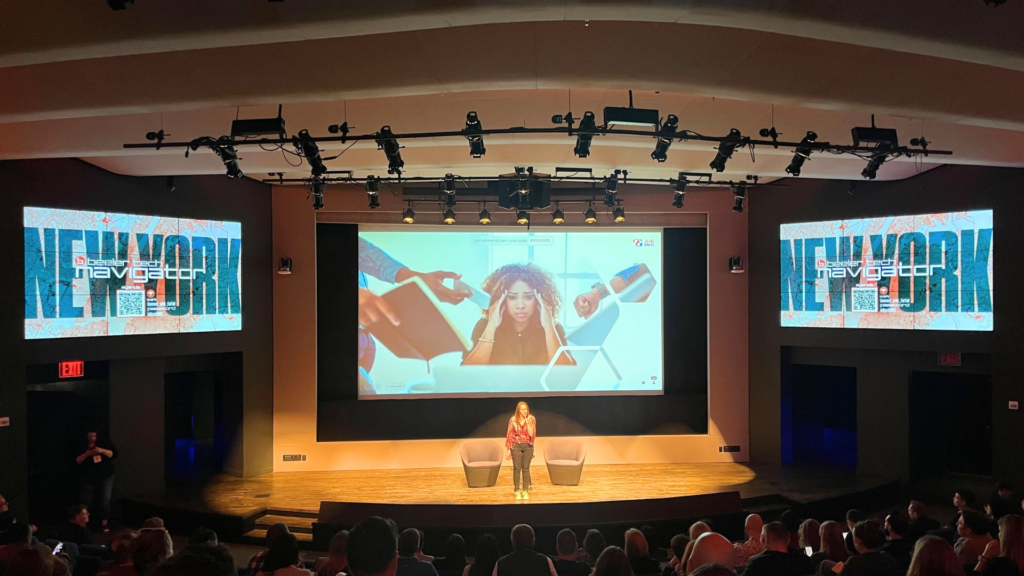
2. AI Is Becoming Core Ad Operations Infrastructure
AI is no longer a future consideration for publishers, it is actively accelerating execution across ad operations today. Tasks that once required dedicated engineering resources or complex reporting infrastructure can now be prototyped and optimised directly by operational teams.
That said, human oversight remains essential. Speakers at Beeler.Navigator were clear: AI outputs are only as strong as the context and expertise behind them. Poor prompts or incomplete data lead quickly to inaccurate results. The real advantage goes to teams that know how to operationalise AI intelligently – embedding it into repeatable, governed workflows rather than treating it as a standalone tool.
The overall consensus: AI has become a force multiplier for publisher revenue operations teams that are already running clean, structured workflows. For those still relying on manual processes and shadow systems, AI alone will not close the gap.
This is precisely the problem DanAds was built to solve – giving publishers the automated infrastructure they need to run monetisation efficiently, at scale, without adding operational complexity.
3. Supply Chain Fragmentation Is Still Costing Publishers Revenue
Despite the availability of technology, true operational alignment across the advertising ecosystem remains elusive.
Recurring friction points include:
- Misaligned incentives between buyers and sellers
- Inconsistent measurement standards
- Lack of clarity around impression validity
- Fragmented workflows and overlapping tech layers
- Persistent supply‑chain complexity and fees.
One standout discussion focused on how much budget continues to leak through these fragmented execution layers.
As audience‑based planning gains sophistication, value is shifting toward identity resolution, clean audience activation, and trusted publisher environments, moving beyond channel‑specific targeting to more holistic, audience-driven models.
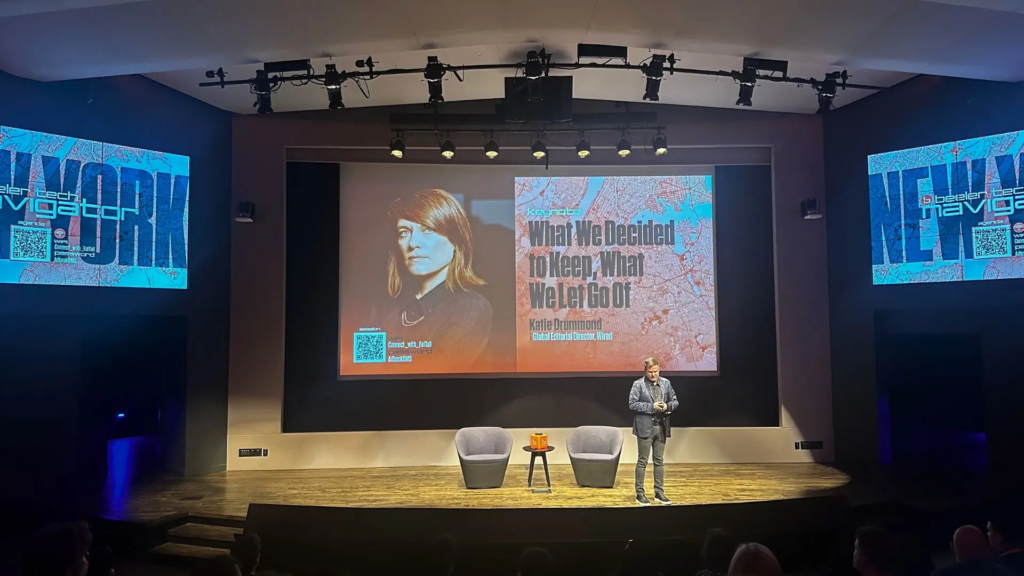
4. Publishers Are Reclaiming Control of Their Monetisation
A clear and consistent theme throughout Beeler.Navigator was the reassertion of publisher control across key parts of the media value chain, including audience data ownership, monetisation strategy, signal quality, marketplace transparency, and direct buyer relationships.
Publishers that invest in operational flexibility, transparent reporting, and robust audience intelligence are already positioning themselves ahead of the next phase of digital advertising. Critically, this is not just about technology – it is about having platforms and workflows that put control back in the hands of publishers, rather than ceding it to intermediaries.
Self-serve advertising platforms, automated campaign management, and clean data infrastructure are increasingly the foundation of publisher independence. Publishers who move in this direction are not just improving efficiency – they are building a more defensible, scalable revenue operation.
Final Thoughts
Beeler.Navigator NYC 2026 reinforced what the data has been pointing to for some time: the future of publisher monetisation belongs to those who can balance intelligent automation with human expertise – combining interoperability, transparency, and scalable workflows to drive real commercial value. The lines between buy and sell sides are blurring. The winners will be the publishers who build systems and partnerships that are as adaptive and data-driven as the audiences they serve.
At DanAds, this is what we build for. Our tech solutions give publishers the automated, self-serve infrastructure they need to reduce operational drag, capture more advertiser demand, and stay in control of how their monetisation runs.
Interested in how DanAds can support your publisher monetisation strategy? Contact us here.


