Media Dashboard
Managing and creating compelling ads shouldn’t be a struggle. We recognize the challenges advertisers and publishers face in juggling multiple campaigns and the necessity for a streamlined creative management solution. That’s why we’re excited to introduce our latest feature: the Media Dashboard.
The Media Dashboard is a centralized hub within our self-serve platform, empowering both publishers and advertisers with complete control over the ad creation and management process. From organizing assets to crafting eye-catching visuals and assigning them to campaigns, this intuitive tool simplifies every step.
Our core objective with the Media Dashboard is to transform the creative process into a seamless and efficient experience. We’re dedicated to providing a user-friendly platform where publishers and advertisers can effortlessly collaborate and manage impactful advertising campaigns. With the Media Dashboard, we anticipate significant improvements in:
- Reduced ad creation time
- Increased user satisfaction
- Decreased campaign abandonment
- Improved overall efficiency
- Faster campaign launches
- Data-driven creative optimization
Key Features and Benefits:
-
- Creative Library:
- Key Feature: A comprehensive list of all created ads, sortable by type and offering detailed views for in-depth analysis.
- Key Benefit: Efficiently track, manage, and evaluate the performance of your creatives, ensuring your campaigns are always performing at their best.
- Media Library:
- Key Feature: A centralized repository to house all your media assets, including logos, images, videos, and more.
- Key Benefit: Effortlessly organize, search, and retrieve your assets, eliminating the time wasted hunting for files.
- Creative Builder and Templates:
- Key Feature: A user-friendly interface to design captivating ads, complemented by a library of professionally crafted templates.
- Key Benefit: Create stunning visuals even without design expertise, and accelerate your ad creation process.
- Creative Library:
- Flexible Creative Addition:
-
- Key Feature: Add new creatives to the Creative Library using file uploads or by leveraging your existing creative tags.
- Key Benefit: Provides multiple convenient options to populate your library, accommodating various workflows and creative sources
- Creative Association:
- Key Feature: Seamlessly link or unlink creatives to your campaigns directly within the Media Dashboard.
- Key Benefit: Streamline your workflow and eliminate the need to navigate between different platform sections.
- Draft Saving and Editing:
- Key Feature: Save works-in-progress as drafts for later refinement and editing.
- Key Benefit: Maintain flexibility and avoid losing valuable work, allowing you to perfect your ads at your own pace.
- Pre-Approval Submission:
- Key Feature: Advertisers can now proactively submit their creatives for review and feedback before finalizing their campaign bookings.
- Key Benefit: This feature helps to get ahead of potential delays by addressing any creative concerns early on, ensuring a smooth and efficient campaign launch.
- Performance Insights:
- Key Feature: Access in-depth delivery and performance metrics for each creative, including campaign-specific breakdowns in the Associations tab.
- Key Benefit: Gain valuable insights into which creatives are most effective across different campaigns, allowing for data-driven optimization.
The Media Dashboard: Your Gateway to Effortless Ad Management
Say goodbye to scattered files, disjointed workflows, and frustrating ad creation experiences. The Media Dashboard empowers publishers and advertisers to unleash their creativity and achieve their campaign goals with ease. We invite you to explore this powerful new tool and experience the difference it can make in your advertising endeavors.
Want to learn more and see how you can best utilize this tool in our self-serve platform, reach out to your Client Partnerships Representative!
At DanAds, we believe in the power of fostering talent and shaping the future of the tech industry. This commitment extends beyond borders, and we’re thrilled to share the inspiring story of our recent internship program in Uzbekistan as part of DanAds Central Asia!
Why Uzbekistan?
Uzbekistan is rapidly emerging as a hub for tech talent. We recognized the immense potential in the country’s young and ambitious programmers. Our goal? To contribute to their educational journeys, mentor their growth, and play a role in shaping the global tech landscape.
Our 2-Month Intensive Internship Program
We launched a two-month internship program in August designed to provide hands-on experience and mentorship to aspiring programmers. The response was overwhelming, with over 200 talented applicants vying for a spot. After a rigorous selection process, we were excited to welcome seven exceptional interns to our team.
A Focus on Growth and Innovation
During the internship, our interns aren’t just observers. They are fully integrated into our teams, working alongside seasoned professionals on real-world projects. We believe that this immersive experience is crucial for their development. By tackling real challenges and contributing to tangible outcomes, interns gain invaluable insights into the practical applications of their skills.
But our focus goes beyond technical skills. We’re equally committed to fostering a culture of innovation and growth. The internship program provided a supportive environment where interns can ask questions and learn from their mentors. We believe that this mentorship is vital for nurturing their confidence and helping them reach their full potential.
Shaping the Future, Together
The impact of this internship program has been profound, both for the interns and for our company. We’ve witnessed their rapid growth, their eagerness to learn, and their fresh perspectives. It’s a reminder that investing in young talent isn’t just about filling positions; it’s about shaping the future leaders of the tech industry.
As we look to the future, we see a clear responsibility to continue empowering the next generation of programmers. We believe that by providing opportunities for hands-on experience and mentorship, we can help create a vibrant and sustainable tech ecosystem in Uzbekistan and globally. It’s about more than just finding talented individuals; it’s about nurturing their passion, cultivating their skills, and inspiring them to reach new heights.
Follow us on Linkedin to hear from some of our interns and to find out about our next internship program!
DanAds is the global leading provider of self-serve and advertising automation platforms. Our success story is powered by an international team of top-tier talent — let’s get to know them! ?
Today we’re introducing Jessica Chu, our Marketing Manager, based in Sweden.
Hey Jessica, could you tell us a little bit about your role at DanAds?
As a marketing manager, I work on bringing our brand’s story to life. I love diving into the creative side, crafting social media posts that spark conversations, handle the email marketing and automations, and support designs for the company internally and externally. But it’s not just about the pretty stuff – I also geek out on streamlining our work, data, tracking campaign performance and setting KPIs to make sure we’re always moving forward.From brainstorming big-picture strategies to planning the tiniest event details, I’m passionate about every aspect of marketing.
What did you do before you started this position?
Prior to working at DanAds, I worked as a Marketing Manager at an HR Tech company doing a very similar role for the Nordic markets. I’ve been working in B2B marketing for awhile, but started out in B2C marketing at one of the largest retailers in Canada.
What inspired you to pursue a career in adtech?
I knew little about adtech, but realized how big of a part of our everyday lives it actually is and what the possibilities are. Adtech is so much more complicated and interesting than I ever thought, I’m drawn to the amount of knowledge and learning I’m gaining everyday in adtech, the challenges to overcome and the opportunities it brings.
What’s the best thing about being part of the DanAds team?
The best thing about being part of the DanAds team is the support you feel. Changing industries and changing countries is challenging, there is always so much to learn and at DanAds there are so many resources and encouragement to learn and grow. I’m never stuck for long, the people are enablers, enabling me to learn and do more. It’s exactly what I need and want to grow.
Five Fast Questions
1. Where are you from?
I’m from a city called Cowtown, or Calgary more formally. It’s along the Rocky mountains and just a stone throw away from Banff, a beautiful town nestled in those mountains. It’s best known for its cowboy vibes from the Calgary Stampede and proximity to great skiing!
2. What’s your favourite music?
This question always stumps me, as I’m a sponge when it comes to music. I love EDM, pop, country, classical, trap, and musicals. Music fills me with such emotion and really most music resonates with me in some way.
3. What’s your favourite way to unwind?
I enjoy playing beach volleyball, hot yoga and strength training. If I struggle physically I can’t think of any other struggles, right? Otherwise, baking, travelling and reading are good ones.
4. What’s your favourite dessert?
I’ve discovered my favourite cake moving to Sweden, the midsummer strawberry cake has overtaken my classic favourites of carrot cake, vanilla cake and chocolate chip cookies. I have a sweet tooth, so I would say nearly everything if I could…
5. Where’s your next destination you’d like to visit?
I’ve been so fortunate to have travelled so much already, 57 countries and counting. Next up has to be Southeast Asia, Thailand/Vietnam/Philippines.
In the battle for ad revenue, publishers love to define themselves as premium. The word implies quality content, a reliable user experience, and a distinct brand identity that sets them apart from MFA (made-for-advertising) junk sites. But who calls the shots when it comes to the premium publisher label? Where is the line between good and premium? Read on to find out.
What are Made-for-advertising websites?
Made-for-advertising (MFA) websites are a growing concern in the digital advertising landscape. These sites, primarily created to generate ad revenue, often feature low-quality or even scraped content, intrusive ad placements, and questionable user experiences. While they may offer advertisers seemingly cheap impressions and clicks, the lack of genuine engagement and brand safety concerns pose significant risks. For publishers, MFAs devalue the entire ecosystem by driving down ad rates and diverting ad spend away from legitimate, high-quality content creators. Overall, MFAs are detrimental to both advertisers and publishers, undermining the integrity of the digital advertising industry.
After the cookie
As with all things advertising, the third-party cookie (or rather its demise) comes into play. After more than a decade of selling audiences, the industry is now reshaping around selling access to premium environments. Think logged-in users, first-party data, and loyal subscribers. In that sense, a premium publisher could be defined as one that builds an identifiable brand and community where users spend time and attention. Users gravitate to high-quality content (which is more expensive to produce than junk) and strong brands (which take time and conscious effort to create).
The value of trust
Another aspect of premium is trust and brand safety. A recent scathing article by Steven Brill highlights how many large consumer brands unwittingly advertise on sites promoting dis-and-misinformation, due to opaque programmatic supply chains. With increasingly vocal and activist consumers, brands simply can’t afford to keep buying inventory from these untrustworthy sites. Premium publishers and premium inventory are the antidote.
Experience first
A great indicator of quality publishing is UX that is designed with the actual user in mind, not just maximising ad space and lead generation. The age of intrusive pop-ups is over, and messy crowded websites won’t survive a battle with AI summaries and quick, clear answers. Check out the examples below to compare the layout of a premium publisher vs a junk site. Users aren’t stupid, and they know the difference.
Don’t cut corners
Along with UX, the quality of visual assets is hugely important. While access to low-cost AI tools means that anyone can create a large quantity of mediocre imagery, premium publishers distinguish themselves by maintaining consistent design philosophy, high-res photography and branded assets. Cutting corners on quality is a short-term strategy with long-term negative consequences.
Several years ago, Digiday posed this same question to leading publishers. Paul Rossi, then-President of The Economist Group, said: “I don’t believe consumers think in terms of a publisher being “premium.” If there is a definition, I think it relates to the commitment a consumer gives to a publisher. Today with more and more media consumption across multiple platforms that commitment is not just money, it’s time… the focus should be on the content from publisher brands that audiences spend a disproportionate amount of time with and advocate for.”
Fundamentally, a premium publisher isn’t just about flashy ad placements or impressive traffic numbers—it’s about delivering exceptional content tailored to a genuine human audience. While seemingly simple, in an increasingly saturated market rife with low-quality content and misleading tactics, this commitment to quality, brand development, and the cultivation of meaningful relationships with actual readers sets premium publishers apart. Such publishers understand that fostering a loyal and engaged readership is the foundation of a sustainable business model that benefits both the publisher and their advertising partners.
Check out some examples below!
If you’re ready to streamline your ad selling process and create accessible ad inventory to any advertiser, contact us today!
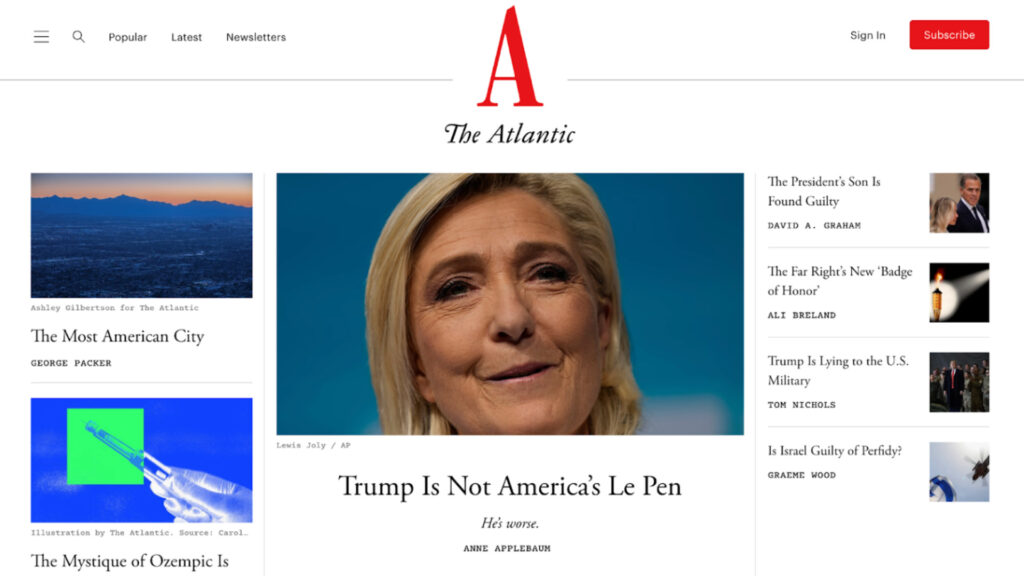
The Atlantic, a premium publisher.

Astrology Daily, an MFA site. Note the clunky layout and overexposure of advertising.
TV advertising might seem like a relic of the past in our digital-dominated world, but it’s far from obsolete. In fact, TV ads offer unique advantages that digital platforms can’t always match. But what does it really cost to get your ad on TV, and how can you make sure you’re getting the best bang for your buck? Well, here’s your answer.
Factors that contribute to television advertising rates
When you’re considering TV advertising, it’s crucial to understand the various elements that influence its rates. Knowing what you’re up against will help you spend smarter and get your ad in front of the right eyes.
First off, TV ratings play a significant role. High ratings mean higher costs, but you’re also paying for a larger and more engaged audience. For example, during the 2022-2023 season, the median price for TV spots hovered around $82,000. But if you’re eyeing prime slots like The Voice or Sunday Night Football, be ready to shell out between $220,000-$830,000.
Here’s what else impacts your bill:
- Demographics: Targeting a hot demographic? Ads aimed at specific age, gender, or income groups can hike up the price.
- Time and day: Prime time (evenings) is premium time, and weekends often cost more than weekdays.
- Location: Ad rates can vary wildly by market. Bigger markets with more viewers naturally cost more.
- Ad length and frequency: Longer ads and more frequent airtime mean higher costs. A 60-second spot? More expensive than a 30-second one, and running it multiple times will add up.
- Production costs: Don’t forget about creating the ad itself. Simple productions might be budget-friendly, but high-quality, professional commercials can get pricey.
PRO INSIGHT:
Average costs for a 30-second commercial spot vary widely:
- Local TV spots: $5 to $35 CPM
- National/cable TV spots: $20 CPM
- YouTube: $10 CPM
- Hulu: $30 CPM
- CTV: $35 to $65 CPM
Busting myths about TV advertising costs
As an advertiser, you’ve probably heard a lot of buzz about TV ad costs, but let’s clear up a few misconceptions that might be holding you back.
— “TV advertising is prohibitively expensive”
Sure, top-tier slots can drain your budget, but don’t write off TV just yet. By targeting specific markets or opting for less prime time, TV advertising can be surprisingly affordable. Local TV spots? They’re often quite budget-friendly.
— “Digital is always cheaper”
Think digital is always the bargain choice? Not so fast. TV advertising can hold its own against digital channels, with CPMs on TV sometimes matching those on Hulu or even radio ads. It’s all about where and how you place your ads.
— “Only big brands can afford TV ads”
The days of TV being an exclusive playground for big brands are over. With smart planning and a clear understanding of your target audience, even smaller businesses can make a splash on TV.
Essential metrics for measuring ROI in TV advertising
Nailing down the success of your TV advertising campaigns means using the right metrics and tools. With today’s data analytics, measuring ROI has never been more precise, and the approach has evolved significantly from the days of broad estimates and general trends. Granular tracking lets you draw more accurate correlations between your ad campaigns and actual business results.
- One key metric is incremental reach. This measures the extra audience your campaign pulls in beyond your regular viewership, giving you a clear picture of your ad spend’s true impact. Incremental reach reports help identify the additional audience brought in by your Connected TV (CTV) ads, providing a more accurate correlation between your campaigns and business results.
- Next up, you’ve got to look at time, location, and device data. Analyzing when and where your audience engages with your ads can provide powerful insights. Are people watching on their phones during lunch or on their TVs in the evening? This data helps you optimize ad placements by revealing the optimal times and places for your ads to hit.
- TV tune-in metrics are another critical tool. These assess if your ads are boosting viewership for specific shows or events, linking your ad exposure directly to audience behavior. TV tune-in metrics show whether your ads boost specific programs’ viewership, offering insights into the content that best resonates with your audience.
- Lastly, don’t overlook foot traffic analysis. This metric shows if your campaign is driving more visitors to your physical store locations, offering a tangible measure of success. Foot traffic analysis determines if your campaign increases physical store visits, providing a direct link between your ads and offline activity.
Data-driven strategies to optimize TV advertising spend
Optimizing your TV advertising spend is increasingly achievable with data-driven strategies.
- Audience targeting. Basically when you use data to tailor ads based on demographics, interests, and behaviors. This ensures your ads are seen by those most likely to engage with your brand, improving both efficiency and effectiveness.
- Interactive video ads, such as pre-roll and mid-roll ads, enhance campaign performance by engaging viewers more deeply and encouraging interaction.
- Self-serve advertising platforms and automation tools streamline the ad buying process, reducing costs and increasing flexibility. These platforms allow you to quickly adjust your campaigns based on real-time data, ensuring optimal allocation of your advertising budget.
Leverage self-serve advertising platforms for cost-effective TV advertising
As an advertiser exploring TV advertising, self-serve advertising platforms (SSAPs) are a must-have. These platforms simplify the ad buying process by automating everything from creation to placement, significantly cutting down costs and reducing errors.
Additionally, SSAPs with the right AI capabilities can quickly analyze large volumes of data to identify optimal ad placements and target demographics, helping you make data-informed decisions that optimize your advertising spend.
Understanding the real cost of TV advertising is just the beginning. To really keep your spending down, using the right tools and strategies makes all the difference. Learn more about self-serve advertising platforms and their capabilities to optimize TV ad costs and maximize impact on our website.
2024 is shaping up to be a major year globally for elections. Upcoming votes include those for the European Parliament (June), the UK (July), and of course the US presidency (November). Election years historically drive up advertising spend as political parties and their supporters compete for attention and influence. Which advertising channels and strategies will be the winners and losers in 2024? How will publishers position themselves?
Read on to get our thoughts and predictions.
Surging ad spend and different approaches
Total US political ad spending will surpass $12 billion in 2024, an increase of almost 30% from the last presidential election in 2020, says Emarketer. In the UK, ad spend is considerably lower but shows interesting patterns. For instance: Sky News reports that Labour, the UK’s centre-left party, is currently outspending the incumbent party, the Conservatives, at a rate of 5 to 1 on Google-owned channels. The Conservatives, meanwhile, spent £15,000 on ads aimed at older, pro-monarchy voters.
Growing channels: digital and CTV
Digital platforms will show the biggest growth in 2024. In the US, digital ad spending this political cycle will spike 156.0% over 2020 levels to reach $3.46 billion. A vital part of this segment is connected TV (CTV) advertising, which mirrors the trajectory of cord-cutting American households. Our recent blog post outlines the attractiveness of CTV advertising and its explosive growth in more detail.
Traditional media: still relevant
Despite the growth of digital, traditional media remains hugely important. Given that older populations consistently have the highest voter turnout, this makes sense, and TV, print and radio are still the best channels to reach them. Ad spend on traditional media around the US election, most of which is TV, will rise 7.9% and account for 71.9% of all spend, reports Reuters.
Publisher strategies: walking a tightrope
What does all this mean for publishers? On the positive: huge ad spend, which the industry desperately needs after several lacklustre quarters and widespread media layoffs. With that said, the landscape is increasingly polarised, and publishers risk alienating large audience groups when they run political ads.
But for many publishers, political advertising is too profitable to ignore. Spotify halted political advertising back in 2020, citing misinformation and a lack of “robustness” in their systems. But in 2024, Spotify accepts political advertisements across music, their Audience Network, and original and licensed podcasts (in certain markets). Something else has changed since 2020: streaming TV has shifted towards advertising. Hulu, for example, began allowing political ads in 2022.
In closing: 2024 promises a significant surge in ad spend driven by high-stakes elections across the world. Digital platforms, especially CTV, are set to see explosive growth, while traditional media remains vital for reaching older, high-turnout voters. Publishers stand to benefit from increased ad revenue, but must navigate the risks of polarisation and audience alienation. The landscape is complex, but with strategic planning and adaptation, publishers are likely to see strong returns and a light on the horizon after several tough quarters.
More insights on advertising:
Subscribe to the monthly DanAds newsletter
The DanAds product road – on-demand webinar
How Philips used self-serve to scale in-app advertising
DanAds is the global leading provider of self-serve and advertising automation platforms. Our success story is powered by an international team of top-tier talent — let’s get to know them! ?
Today we’re introducing Zukhra Nazarova, our Recruiter & Social Media Manager, based in Uzbekistan.
Hey Zukhra! Could you tell us a little bit about your role at DanAds?
Hi! My role is twofold: to attract talent (particularly engineers) and to recruit them to DanAds at our Uzbekistan location. We’re looking for candidates with strong technical skills and PHP experience, as well as QA engineers and interns. Since DanAds is an international business serving well-known brands like Paramount and Roku, it’s important that we find ambitious candidates looking to develop their skills. It’s my responsibility to host events and other marketing activities that attract applicants, and then screen and coach them to find the best fit. It’s an important role that helps our global workflow run smoothly to deliver great end-results on complex projects!
What did you do before you started this position?
Before DanAds I worked in a number of different industries, including automotive dealerships. These roles allowed me to learn the importance of logistics, communication, and process optimization. I developed a particular passion for marketing, and I always enjoy connecting different stakeholders and bringing clarity to complex projects. As a recruiter and SMM at DanAds, I’m able to combine these skills and interests, using both my creative and logical sides. It’s a really unique role and one that feels perfectly tailored to my background and career path!
Five fast questions with Zukhra
Where are you from?
– I’m from one of the hottest countries in Central Asia: Tashkent, Uzbekistan.
What’s your favorite music?
– My music taste depends on my mood. I’m a big fan of Billie Eilish, Justin Bieber, and an old Directioner at heart. Besides pop music, I also enjoy EDM, a bit of RnB, and classic rock.
What’s your favorite way to unwind?
– I love dancing Zumba, playing beach volleyball, being in nature, and spending time with my friends.
What inspired you to pursue a career in ad tech?
– I graduated from Turin Polytechnic University in Tashkent with a bachelor’s degree in Automotive Engineering. I’ve always wanted to work in information technology, especially in a field related to advertising and marketing.
What’s the best thing about being part of the DanAds team?
– Dreams do come true! I always dreamt of working in an international company related to IT. Being part of DanAds allows me to experience a dynamic environment, collaborate with a team of great specialists, and both gain and share valuable experience.
In this blog post, we’ll explore the top five benefits of smart TV advertising. From reaching a wide audience to delivering highly targeted ads, smart TV advertising offers unique advantages for brands looking to stay competitive in a rapidly evolving market. Let’s dive in and find out why brands of all shapes and sizes love smart TV advertising.
Defining smart TV advertising
Before we start, let’s quickly define what we mean by smart TV advertising. A smart TV, also known as a connected TV, is a television set with integrated internet capabilities that allow users to access streaming services, apps, and online content directly from their TV screens. Smart TV advertising means delivering targeted advertisements to viewers through these connected devices.
The main difference between linear TV advertising and smart TV advertising is delivery. With the former, ads are delivered according to a set schedule, regardless of whether the user is watching TV at that moment or not. With the latter, ads only appear when the user interacts with content on their smart TV device. Now, let’s examine the benefits of running ads on smart TV.
1. Wide reach
Smart TV advertising allows your brand to reach a wide and diverse audience. As more and more households adopt smart TVs, the potential reach of these advertising campaigns continues to grow. By 2026, smart TV ownership is set to exceed 1.1 billion households worldwide. Unlike traditional TV advertising, which is limited to specific time slots and channels, smart TV ads can be delivered to viewers across various streaming platforms and apps, maximising exposure.
2. Targeted advertising
One of the key benefits of smart TV advertising is its ability to deliver highly targeted ads to specific audience segments. By leveraging data analytics and user insights, you can tailor your ads based on factors such as demographics, interests, and viewing behaviour.
This approach ensures that your ads are shown to the most relevant audience, increasing the likelihood of engagement and conversion. Smart TVs often host multiple user profiles, allowing advertisers to specifically target different audiences within the same household and on the same device.
3. Interactive engagement
Smart TV advertising offers interactive features that traditional TV ads lack. Viewers can engage with ads through clickable elements, interactive content, and even voice commands. This interactive experience not only captures viewers’ attention but also allows them to interact with brands directly, driving deeper engagement and brand awareness. In the last year, interactive CTV campaigns drove a 5.42% engagement rate, compared to a rate of 0.97% for mobile and PC.
4. Measurable results
Unlike traditional TV advertising, which can be challenging to measure and track, smart TV advertising provides you with detailed analytics and performance metrics. From impressions and views to engagement and conversions, advertisers can accurately measure the effectiveness of their campaigns and optimise them in real-time for better results. This data-driven approach enables brands to make informed decisions and maximise their ROI.
5. Cost effectiveness
Smart TV advertising is a cost-effective alternative to traditional TV advertising. With flexible budget allocation and pricing models, advertisers can optimise their spending and achieve their marketing objectives within their budget constraints. Additionally, the ability to target specific audience segments reduces wasted ad spend, making smart TV advertising a cost-efficient option for brands of all sizes.
Taking the next step
If you’re ready to start exploring smart TV advertising for your business, try exploring Roku Ad Manager. Roku is the #1 TV streaming platform in the U.S. (by hours streamed) and offers advertisers a simple self-serve interface to create sponsored content. Roku Ad Manager is a partnership between Roku and DanAds, the world’s leading provider of self-serve advertising technology. You can learn more about how DanAds empowers advertisers with our case study library, or by subscribing to our newsletter. Thanks for reading!
The rise of streaming-first networks
Streaming-first networks have shaken up the old TV scene, making clear that content rules. For you, as a publisher, this means a chance to engage your audience directly with the high-quality, on-demand content they’re after.
By getting in on streaming-first channels (or even starting your own), you’re not just following the trend – you’re leading it. This move puts you in the driver’s seat, ready to attract an engaged audience and turn their attention into targeted advertising opportunities.
Shifting from traditional to streaming TV
The move from traditional cable to streaming is your opportunity to revolutionize your approach to advertising. With giants like Netflix and Hulu opening their doors to ad-supported models and 85% of US households subscribed to at least one video streaming service, it’s clear that integrated advertising is becoming an untapped goldmine.
Here’s where you come in – armed with innovative, viewer-first advertising strategies. Capitalize on this shift by offering ads that resonate with viewers and blend seamlessly into their streaming experience. And the best way to do it? Advertising platforms.
Unlock full streaming ad potential with self-serve advertising platforms
Self-serve advertising platforms are game-changers for publishers like you, looking to squeeze every bit of value from your ad inventory without risking brand safety. These platforms hand you the keys to automating ad sales and targeting with laser precision on streaming TV, boosting efficiency and your bottom line.
Dive into self-serve tech, and you’re looking at a future where you’re in full control of ad placements, crafting campaigns that speak directly to your viewers’ preferences, and connecting with advertisers hungry for niche audiences.
Self-serve advertising platforms also happen to be built on the availability of first-party audience data, making the case for their use even better. But more on that later.
Leverage first-party data for tailored ad campaigns
Okay, not that much later. First-party data? Your secret weapon. As a publisher, you have direct access to viewer insights through streaming platforms – such as what your audience loves, watches, and behaves like online.
By tapping into this data (hint: through your advertising platform), you position yourself to deliver personalized, engaging, and memorable ad experiences. The approach enhances the relevance of your ads and boosts their impact, giving advertisers the targeted reach they dream of.
Build trust through quality content and relevant advertising
In addition to utilizing self-serve platforms and first-party data, you also need to consider your relationship with viewers. Because building trust isn’t just about delivering great content; it’s about how your ads complement that content.
As a publisher, your knack for curating content that hits the right note with your audience does more than keep them coming back – it turns your platform into prime real estate for advertisers looking to connect through quality and relevance.
By seamlessly weaving ads into your content’s fabric, matching its tone, and catering to viewers’ interests, you’re doing more than selling ad space. You’re also enhancing the viewing experience, solidifying viewer loyalty, and opening doors to more receptive advertising engagement.
The cherry on top: Connected TV (CTV)
Another factor is the growing use of Connected TV (a.k.a. TVs connected to the internet). The shift in spending speaks for itself. While traditional TV ad budgets are shrinking, connected TV ad investments are on a sharp rise, with a projected increase of 36.5% against a decline in linear TV by 7.5%. Why not capitalize on this?
CTV isn’t just another channel – it’s your direct line to viewers’ living rooms. For you, it means offering advertisers a golden ticket: prime ad space where campaigns come alive, captivating viewers on a bigger screen and leaving a lasting impression.
Ready to take control of your advertising future? DanAds provides the cutting-edge tools you need to thrive in the evolving landscape of streaming TV. Our self-serve advertising platform gives you autonomy over your ad operations, enabling you to create, manage, and optimize campaigns that resonate with your audience and attract high-value advertisers. Reach out to us today to see how DanAds can amplify your advertising potential.
The key facts are staggering:
- NBCUniversal has secured over $1.2 billion in ad commitments for the Games.
- $350 million of this spend will be contributed by first-time advertisers.
- Live sports, which had largely evaded the streaming realm, is now undergoing a transformative shift.
A shifting landscape
What are the factors driving spending from linear to streaming platforms? Primarily, it’s evolving viewing habits, especially among younger demographics. Today’s youth are veering away from television sets and communal sports gatherings toward individualised, small-screen viewing experiences. Faced with an abundance of media choices, viewers have become more selective, leading to a fragmented audience. Cord-cutting continues to rise, paralleled by the proliferation of streaming services.
In essence, the advertising spend surrounding the 2024 Olympics mirrors a broader trend in the dynamic between linear and streaming TV, consumer behaviour, and advertising strategies. Brands advertising on NBCU Peacock during the Games can now purchase ad slots using automated technology rather than relying on salespeople. This move towards self-serve advertising signals a shift towards more agile and efficient ad operations.
Peo Persson, CCO & Co-founder, comments: “It was inevitable that the benefits of speed and scale offered by automated advertising would catch up to live sports. By combining first-party audience data and precise targeting, streamers that embrace self-serve are positioned for massive gains in live sports and similar global media events.”
Unlocking new opportunities
By breaking down the Games into smaller, more tailored pieces of content, streaming platforms like Peacock have unlocked opportunities for targeted advertising, moving away from one-size-fits-all approaches. This shift towards more focused advertising can translate to reduced costs and increased accessibility for smaller and more diverse advertisers.
Steve Ellis, COO of Paramount Advertising, recently commented that “premium video is the one space left in media with scale that SMBs (small-and medium-size businesses) have not really had an optimised experience for… It’s streaming and ad-supported streaming and that scale that allows us to even investigate that opportunity.”
Streaming loves sports
Further evidence of streaming’s growing attraction to live sports is Netflix’s recent announcement of a $5 billion partnership with WWE, adding wrestling to their expanding sports content library. Netflix has also ventured into hosting their own sporting events, including a golf cup in 2023 and a tennis slam in 2024.
Expanding the discussion on the rise of streaming TV and its impact on advertising, it’s evident that this shift is reshaping the landscape of media consumption and marketing strategies. As streaming continues to dominate, advertisers will need to adapt to this evolving landscape to effectively reach their target audiences.
More advertising insights and resources from DanAds: